So, you want to get your business’s name out there. More importantly, you want to get it in front of key decision-makers in your industry.
But what if your business is relatively small and you’re on a tight marketing budget? How do you make the right connections and get good brand mentions?
The answer is public relations (PR). Though PR may seem like something only for big brands, this isn’t true. Even small businesses can take advantage of PR strategies, and fortunately, they don’t require big marketing budgets.
In this article, we’ll go over what PR means and our top tips for improving your PR outreach at a minimal cost. Let’s get started!
PR refers to managing and maintaining a positive public image of your brand. Typically, this is done by seeking out positive exposure on media platforms that your target audience follows.
For example, PR could involve reaching out to a news outlet to do a story about your business, publishing a press release for a new product launch, pitching a story to an industry magazine, or featuring as a guest on an industry-relevant podcast. There are many ways to approach PR.
That said, PR is not to be confused with marketing. Both are concerned with building your business, but marketing is ultimately focused on boosting your bottom line by increasing revenue, whereas PR is primarily concerned with cultivating a good business reputation.

Source: https://www.kochiesbusinessbuilders.com.au/wp-content/uploads/2022/02/public-relations.jpg
Now that you know what PR is, here are some tips to improve your PR outreach:
Before you start reaching out to media outlets, make sure your business has a good online presence. This means going over your business website, social media profiles, and other online accounts to make sure they look clean and professional.
Get rid of any broken pages or links on your website and make sure you have a professional photo on your social media accounts and that you actively use them. There’s nothing that says your business is out of touch more than an outdated website or an unused social media account.
Another way to improve your online presence is to create a professional media kit. This is a small document that includes information about you and your company such as a bio and a professional photo. By including your media kit every time you pitch a media outlet, you make it easy for relevant journalists to cite and feature you.
If you’re planning a successful pr outreach campaign, having access to the right pr outreach tools can streamline the process and help you target the appropriate contacts. These tools make it easier to build strong media relations and establish credibility among pr professionals and the wider media industry.
Next, determine who you want your PR efforts to reach. In other words, who is your target audience and what media outlets do they follow most?
For example, if you own a fintech company, you may want to target business owners by pitching a news outlet like Forbes or Fast Company. Or if you own a real estate business, you might aim for a feature in Inman or Housingwire.
The goal is to find out where your target market hangs out and get your company name talked about in those circles. If you’re not sure where your target market is, consider surveying your existing customers to find out.
Also, keep in mind that the definition of media is expanding. In addition to getting featured in traditional publications like the Wall Street Journal (WSJ) or the New York Times (NYT), you may want to target various social media platforms, blogs, and independent publications.
Whatever you do, make sure the outlets you reach out to serve your target market and cover what your business is about.
If some of the news outlets mentioned so far sound out of reach, that’s okay. You don’t have to start by pitching top newspapers. In fact, you probably shouldn’t. It takes time to cultivate good PR.
Instead, set realistic and manageable PR goals. Start by pitching smaller publications and then gradually work your way up to pitching bigger ones. You’re more likely to get in with bigger outlets if you already have some smaller media mentions.
Once you’ve established some realistic PR goals, you can work them into a long-term PR strategy.
Another way to get your company name out there is to share your expertise online. This could mean publishing free content on your business’s blog or on social media.
For example, if you run a wealth management firm, you could post your top tips on how millennials can save for retirement. Or if you own a personal injury law firm, you might post about ways to win a car accident lawsuit.
The idea is to become a thought leader in your industry niche. That way, media outlets will be more inclined to feature you (because you already have a following), and in some cases, they may even reach out to you.
When it comes to actually pitching media outlets, make sure you have a newsworthy story to tell with a unique angle. Media companies get pitched stories all the time, so yours needs to stand out to get their attention.
Focus on what makes your company unique but don’t forget to pitch a story that will be useful to the publication. Research their audience and what types of content they have published in the past. This will give you a clue as to what they’re looking for.
That said, almost everything is a potential story, so dig deep. Company milestones, corporate events, or industry insights can all make for good stories if you know how to tell them right.

If you’re having trouble finding media outlets to reach out to, there are many PR tools and resources out there that can help. Here are just a few:
On top of using social media to connect with journalists, you can use it to identify and build relationships with industry leaders. For example, you can use it to connect with influencers who may agree to advocate for your brand or sponsor one of your products.
The beauty of using social media for PR is that it’s free. You don’t have to spend any money to get into the right circles. However, you will need to dedicate time and effort to being active on the platform. That’s true whether you’re using Twitter, Instagram, Facebook, or LinkedIn.
Whenever you do get featured in the media, it’s important to share it. For example, if you’re a guest on a podcast, share the link to the episode across social media. Or if your brand is featured in a news article, share it online and tag the outlet and journalist.
This not only helps spread your brand name online but helps strengthens your relationships with media outlets and journalists, who may then tap your shoulder for future features.
If you haven’t been able to tell already, relationships are the foundation of good PR. Without them, getting good press will be extremely difficult.
One way to improve your media relationships is to start building them early. Don’t wait until you get a feature in an article or podcast. Begin getting to know the right people now by offering your help and expertise. Take a value-first approach, where you give, give, give, and only ask once you have a reason to expect something in return. That way, you’re more likely to get the media features you’re after.
Another way to build good relationships is to get involved in community events and charities. This helps you get to know different people you may not otherwise meet and can lead to good PR opportunities.
Lastly, there’s no point in investing in PR if you don’t track your results. As the late Peter Drucker said, “You can’t improve what you don’t measure.
”How do you measure PR results? Start by following the news and social media to see when your company name gets mentioned. Many platforms like Twitter allow you to track different keywords or hashtags, for example.
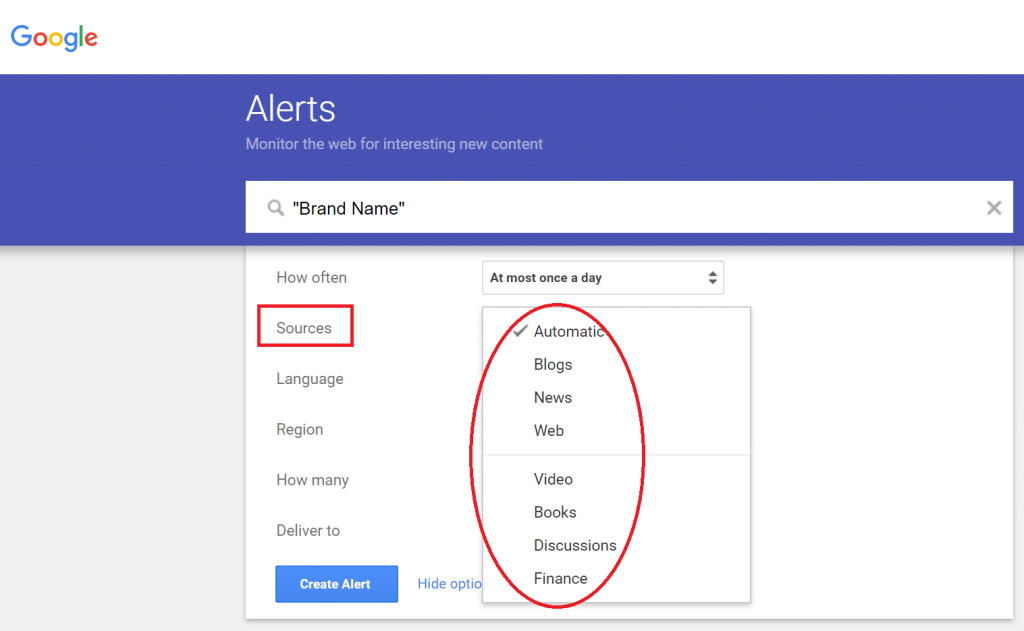
Another easy way to do this is to set up a Google Alert. This lets you collect online mentions of different keywords, such as your company name or industry, via daily or weekly emails.

The point is to track how often your brand is mentioned so you can see what is working in your PR strategy and what isn’t and then adapt.
If this all sounds overwhelming, don’t worry. PR outreach can be challenging, especially when you’re just starting out. What you don’t want to do is blast as many PR pitches to as many outlets as you can think of. There are better ways.
To take your brand recognition to the next level, consider partnering with Marketer.co. We have established relationships with some of the internet’s top publications, and we can help get your company’s name featured in them in no time. Contact us today to learn more! We look forward to learning more about you and all your PR needs.

Social media advertising has become an increasingly important tool for businesses of all sizes to drive conversions and sales.
By reaching a targeted audience and showcasing products or services, social media ads can be an effective way to drive traffic, generate leads, and boost sales.
However, with so many options like reputable digital marketing agencies, it can be challenging to know where to start. In this article, we'll discuss the best practices for driving conversions and sales through social media advertising.
Social media advertising refers to paid advertising on social media platforms such as Facebook, Instagram, Twitter, and LinkedIn.
These ads can appear in a variety of formats, including sponsored posts, banner ads, and in-stream video ads. Social media advertising differs from organic social media marketing strategy, which refers to unpaid social media posts created by businesses to engage with their audience.
The first step in any social media advertising campaign is to set specific and measurable goals.
Common goals for social media campaigns include increasing website traffic, generating leads, boosting sales, or increasing brand awareness. Setting clear goals from the outset will help to ensure that your advertising efforts are focused and effective.
Here are some tips to help you set clear and measurable goals:
Social media advertising offers an unparalleled advantage over traditional forms of marketing: the power to pinpoint your target audience with laser precision. By leveraging demographic, behavioral, and interest-based data, you can craft buyer personas that will guide your advertising strategy toward the audience that matters most.
Through social media audience targeting, you can significantly boost the effectiveness and efficiency of your marketing efforts, allowing you to reach the right people, at the right time, and in the right place. With this game-changing approach to advertising, you can maximize your ROI and see real results like never before.
Below are some valuable tips to help you effectively target your audience through social media advertising:
Crafting impactful social media ads demands meticulous attention to detail and an in-depth comprehension of each platform's functionality.
Optimum practices for creating compelling social media ads consist of employing striking visuals, powerful headlines, explicit calls-to-action, and experimenting with diverse ad formats.
Remember, social media advertising is a dynamic space; therefore, be willing to adjust your approach as the landscape continues to evolve.
Here are some tips for crafting effective social media ads:
Once your social media advertising campaigns are up and running, it's crucial to track and analyze their performance. Key metrics to track include click-through rate, social media conversion rate, cost per acquisition, and return on investment.
By monitoring and measuring the success of your social media advertising campaigns, you can identify what's working and what's not and make informed decisions about how to optimize your social media strategy going forward.
Here are some tips for monitoring and measuring the success of your social media advertising campaigns:
Social media advertising can be a powerful tool for businesses looking to drive conversions and sales. By setting specific goals, targeting the right audience, crafting effective ads, and monitoring and measuring success, businesses can make the most of their social media marketing efforts. Additionally, a well-thought-out social media conversion strategy can help businesses capitalize on the growing number of social media users, turning engagement into tangible results.
As social media platforms continue to evolve, it's important to stay up-to-date on the latest trends and best practices to ensure your social media advertising campaigns are as effective as possible. Maintaining a strong social media presence and focusing on strategies to increase social media traffic can further amplify the impact of your campaigns.

Digital marketing is a practical necessity if you're interested in greater brand visibility, generating more traffic for your website, landing more sales, or a combination of these.
But how do you handle that digital marketing?
One option is to hire a digital marketing agency – a special type of business designed to provide digital marketing services in exchange for recurring fees.
Unfortunately, digital marketing agencies are rarely cheap. If you're swimming in extra money, you probably don't need a digital marketing agency in the first place, which means most potential digital marketing agency clients need to think critically about whether hiring an agency is truly worth the money.
Are digital marketing agencies worth it? And how can you tell for sure?

A digital marketing agency is a business that provides many different types of digital marketing strategies and services to its clients. These services can include things like:
Digital marketing companies typically employ individual specialists, including strategists, data analysts, designers, writers, and account specialists, to take care of this work. Because they also have an extended network of contacts and resources they can draw upon, working with a digital marketing agency is typically scalable. When you're first starting out, you can take advantage of a relatively inexpensive plan, and as your business grows and your needs change, you can tap into those extra resources.
Digital marketing professionals typically charge money in one of three ways. They may charge a monthly retainer fee, based on the number of hours you used during a specific time period, or based on individual projects.
The digital marketing strategies implemented by your agency’s efforts will likely boost brand visibility and reputation, increase web traffic, and increase conversions—though agencies rarely guarantee these types of improvements.
A digital marketing agency isn't your only option.
There are also several alternatives to consider.
In a discussion of whether a digital marketing agency is worth the money, we need to know what we're comparing against; a $500 hamburger might be worth it if you're starving, but probably isn't worth it if you can make a similar hamburger for a couple of dollars at home.
The problem is tracking down and continuously working with freelancers who are truly reliable experts. If you depend on a network of contractors, half of your marketing responsibilities will be finding new freelancers and coordinating them. While inexpensive, freelancers are less consistent and less reliable.
There's no clearly superior alternative, though some businesses will clearly prefer one of the above options over digital marketing agencies for one reason or another.

We also need to consider the cost of digital marketing agencies. Obviously, the price of a digital marketing agency will depend on many factors, including the agency's experience level and specialty, the services you require, the extent of those services, how the payment plan is structured, and more.
Still, we can make a high-level assessment of the price of the average digital marketing agency.
Currently, digital marketing agencies charge about $2,500 to $12,000 per month for small- to mid-sized business clients. That equates to an hourly rate between $50 and $500 (for most agencies), or $1,000 to $7,500 per project (though this varies significantly based on the nature of the project).
Depending on what you need, you can expect to pay at least a few thousand dollars every month for these services.
Is a digital marketing agency worth the money?
That depends on how you define “worth” – in other words, how you define the value an agency gives you. In our previous example, a $500 hamburger is worth it when you're starving, because the alternative is death, thus making the value of the hamburger “life” itself. Most of us would estimate that the value of a human life is far more than $500, making this a deal. But if the value is simply a slightly bigger hamburger, most of us would agree that the extra money is a waste. In most situations, the best tool to measure digital marketing agency value is your return on investment, or ROI, though this isn’t always easy or straightforward to calculate.
Essentially, you want to figure out how much material value the digital marketing agency is generating for your brand, relative to the amount of money you’re spending with the agency. You'll also need to consider this metric as it relates to alternative options.
For example, let's say you spend $10,000 per month with your digital marketing agency of choice. If they generate $5,000 in new sales for your business, you can clearly see a problem; you'll essentially be losing $5,000 every month, proving that this digital marketing agency is not worth the money. If they generate $50,000 in new sales for your business, the agency is very obviously worth the money.
Unfortunately, ROI can be difficult to calculate. There are simply too many variables to account for. If your agency is charging you a flat rate for services, this can streamline things, but you'll still need to take into account subtler cost variables, like how much time you spend talking on the phone with your account representative.
On the benefit side of the equation, it's important to consider the net value of meaningful actions generated by your agency, which isn't always straightforward. For example, let's say your digital marketing agency sends 100,000 people to your website. To understand how much value this has, you need to understand the average value of a website visitor.
We must also consider how we attribute things to the digital marketing agency. If 100,000 people visit your website, are you confident that all of them visited because of the actions your digital marketing agency took? What if you have independent marketing strategies running in the background? What would have happened if you executed this campaign, instead of your digital marketing agency?
Complicating things further, we need to consider forms of value that digital marketing agencies provide that can't be easily calculated. For example, if a digital marketing strategist teaches you a new principle that changes how you construct landing pages forever, multiplying your conversion rates many times over, how do you represent this in your ROI equation?
Because of these complicating variables, we can’t even begin to ballpark the “average” or expected ROI of a digital marketing agency. Even if we could, there would be digital marketing agencies seeing results far above and far below this figure. What’s important is that you have some kind of ROI-centric value equation you can use to approximate the value of the agency you work with. Your agency will likely attempt to prove its value as well, in a bid to keep you as a satisfied client.
Though certainly not guaranteed, most digital marketing agencies will return value that exceeds what you spend on them. If an agency can’t at least meet this threshold for service, it typically loses clients quickly and fades into oblivion; if an agency has been around and serving many clients for many years, you can usually count on a relatively high ROI.

Since our default assumption is that digital marketing agencies are usually worth the money, it might be easier to explain the situations and circumstances that make a digital marketing agency not worth the money.
As long as you have decent standards for agencies you hire, you can generally count on finding an agency that returns a sufficient amount of value to your organization. The real question is whether you're able to find the best possible digital marketing agency for your brand.
In other words, assuming nearly all digital marketing agencies are “worth the money,” how do you find the agency that returns the greatest amount of value for the money you spend?
Define this, and pay especially close attention to the agency’s areas of specialty, years of experience, current client portfolio, reviews, and general reputation within the marketing community. Due diligence is essential if you want to make the best choice.
Additionally, be ready to collaborate with your digital marketing agency to push your results even higher. A positive ROI is a good thing, but there's no upper limit to how high your ROI can climb when you're ready to push for it.
So, what's the bottom line here? For most businesses in most situations, a digital marketing agency is worth the money, assuming that a digital marketing agency is sufficiently experienced and competent.
There are many forms of value to consider when estimating worth, making ROI equations complicated, but you should still be able to estimate the prospective value of digital marketing agencies you're considering.
Are you interested in working with a digital marketing agency that can prove its value? Or are you just interested in seeing what types of digital marketing agencies are out there? Start here. Contact us for a free consultation today!

Imagine a hypothetical reality in which your website was the only one with any content related to how to buy a car. Yes, it sounds preposterous. But let’s run with it.
In this hypothetical reality, SEO would be trivially easy. When someone searches for “how to buy a car,” your website would be ranked one. In fact, your “rank one” position wouldn’t even matter – there wouldn’t be any other entries competing with you. You’d get all the possible organic traffic produced by people searching for this phrase.
Obviously, we live in a very different reality. Search for “how to buy a car” and you’ll see “about 3,990,000,000” results. And at the top of those results, you’ll see massively powerful brands like Edmunds, KBB, and NPR.
If you want to rank for this phrase, you’d have your work cut out for you – and even if you invest heavily in this pursuit, there’s no guarantee you’d ever get to page one, let alone rank one.
In your industry, you might be facing similarly intimidating odds and equally tough competitors.
So how do you manage it?
How do you beat your toughest SEO competitors without destroying your marketing budget in the process?

The competition problem in SEO essentially boils down to this: powerful competitors make it economically challenging and borderline impossible to compete in direct and traditional ways.
These are brands that have likely spent years if not decades, and hundreds of thousands of dollars reinforcing their positions. To disrupt them would take an even bigger effort – and even then, you’re not guaranteed to beat them.
Do you just ignore them and abandon SEO for a different, less competitive strategy? Not if we can help it.
There are actually several different approaches available to you – and each of them has the potential to help you achieve your SEO goals, no matter how fierce your competition is.

Up first is the brute force approach, and you can probably guess the main strategy here. Whatever your competitor is doing, you’re going to do more. If they spend $10,000 a month, you must spend $15,000 a month. If they’re building 20 backlinks a month, you must build 25 backlinks a month. This requires a thorough SEO competitive analysis, including examining your competitors' backlink profiles to identify gaps and opportunities. If you keep up this pressure without sacrificing quality, you’ll overtake your top competitor eventually.
If you’re on the highway going 65 mph and you’re trying to catch someone going 60 mph, it’s only a matter of time before you catch up – no matter how much of a head start they have. If they slow down or stop, you’ll catch up even faster. The big problem with this strategy is that it’s not economically efficient. Sure, you might be able to spend your way to rank one, but if you don’t generate enough organic traffic from that rank-one position, it could end up being a loss.
In most cases, the better approach is to invest your money in more economically efficient strategies; why spend $15,000 a month outcompeting a dominant SEO player when you could spend $10,000 on PPC ads and get even more traffic? Conducting competitor analysis with an SEO competitor analysis tool can help you determine where your competitors are investing their efforts and where you can allocate your resources more effectively.
However, every situation is unique and requires careful analysis.

The “skyscraper technique” is so named because it calls to mind the image of a city skyline filled with skyscrapers. The tallest skyscraper is the one that catches your attention first – and oftentimes, the one that becomes the representative symbol of the city. This desirable position has driven countless architects and civil engineers to engage in fierce competition to outdo each other with taller, more attractive skyscrapers.
The skyscraper approach to battling competitors is functionally similar. But instead of building a single tall skyscraper in a single city, it’s more like building taller skyscrapers in a bunch of different cities.
Here’s what we mean by this. If your competitor has an awesome piece of content with tons of links pointing to it, your goal is to produce something even better – so you can attract even more links and outcompete them. If your competitors rank highly for certain search terms, your goal should also include creating content that targets the same keywords effectively, ensuring you gain visibility on the search engine results pages (SERPs). If your competitor has a backlink profile with a dozen high-quality links, your goal is to earn similar links from the same sources – and then a few extra.
Keep this up, and it’s only a matter of time before you’re in a better SEO position. You don’t need to pick fights on every front, of course; even a handful of superior assets can be valuable for your brand. Conducting thorough SEO competitor research will help you identify key opportunities, especially when analyzing competitors' domains and their strategies to engage the same target audience.
The biggest weakness of this approach is that it demands strategic focus. This is true of any SEO strategy, but it’s particularly important here since you’ll need to outdo your competitors in “low-hanging fruit” areas that are both accessible and valuable. These points of vulnerability can be hard to find and often depend on how your competitors' content appears in search results.

The antagonistic approach is more directly confrontational, putting you in a position to undermine your top competitors – or at least prove your comparative value.
Here, your goal isn’t necessarily to outcompete your rivals, but instead to position yourself as a meaningful alternative in an environment where they’d have near-exclusive control.
The most common territory to target here is branded keywords. Let’s say you sell paper towels and your biggest competitor is a brand called O-Sheets. O-Sheets would, by default, dominate the SERPs for any words or phrases containing “O-Sheets” or other branded terms. It’s practically impossible to outrank them for these terms – but you can aspire to reach rank two.
Let’s say you reach rank two with a piece of content like “Are O-Sheets Truly the Best Paper Towels?” On the page, you compare O-Sheets paper towels to yours, proving that yours are more absorbent, less expensive, and more comfortable to use. Even if you only capture a fraction of the traffic for O-Sheets branded terms, you’ll be siphoning traffic from your rivals and converting fans from their brand to yours.
You can also use a similar siphoning strategy in your PPC ad campaign.
Obviously, rank two isn’t quite as good as rank one, and if you start a direct brand conflict like this, you’re inviting retaliation. This approach is also limited in its potential; there are only so many branded terms to cover and only so much damage you can do.
We also have the avoidance approach. No, this isn't about closing up your business because you can no longer compete. Instead, it's about finding strategic ways to avoid directly confronting your competitors while still actively competing with them.
In most cases, this boils down to finding critical ways to differentiate your brand from those of your competitors. For example, you can sell slightly different products. You can reach a slightly different audience. You can target users in a different area or optimize for different groups of keywords.
Your goal is to find meaningful, valuable areas where your competitors aren't so dominant; without these rivals standing in your way, you'll have a clear path to the top of the SERPs. There are a few small weaknesses with this approach, though it tends to perform consistently when used properly. For starters, your competitors are likely dominant in the most valuable areas of optimization.
Choosing to avoid those in favor of less competitive ground means you'll be pursuing inherently less valuable targets in most cases. Additionally, it's hard to avoid competitors entirely; there may be fewer competitors or less fierce competitors in a new area, but you'll still need to have some way to differentiate and improve the value of your work.
Do note that you're not limited to following any single approach or strategy. Instead, you can use a combination of these strategies or all of them together. For example, you can optimize for competitor-branded keyword terms, avoid competitors by targeting a different audience, and still follow the skyscraper approach to outcompete them in specific areas.
Also, this list is not exhaustive. In some cases, it may pay to collaborate or directly partner up with your competitors, rather than pitting yourself against them. And of course, you’re free to exercise your own creativity to come up with a novel strategy.
Are you dealing with SEO competitors you just can’t seem to dethrone? Or are you ready to launch into your industry, guns blazing, to dominate the competitors who have been at the top too long? We’ve got the strategists and resources you need to thrive.


Generating conversions from PPC ads isn’t hard, but you This article will explain some of the key factors that influence (or deter) conversions.

Once a user clicks on your ad, it will be your corresponding landing page that drives home conversions. A well-designed page will reassure people that your site is trustworthy. A poorly designed page can give the impression that the offer might be a scam or low-quality.Make sure your landing page has the following elements:
Focused landing pages increase conversion rates. Instead of sending prospects to your home page and letting them explore your site, send them to a specific, dedicated, and focused landing page designed specifically for each offer.
The process of interacting with your ads and landing on your website should be a continuous experience. For example, if your ad promotes 10% off of cartoon-printed socks, the user will expect your website to present that exact offer. When they click on your ad, your landing page should be dedicated to that specific offer, depicting all the cartoon-printed socks you sell.
You don’t want to send people to your “Sock Company” home page because it breaks the continuity and that’s when a lot of people will bounce. To maximize conversions, keep your landing page focused on the offer in your paid ad.
Copy is just a fancy word for “text” and it happens to be one of the most influential factors in PPC conversions. Your ad may not have more than a headline and a few words as a description, but the right words can get more clicks and the wrong words can turn people off.
If you want to increase conversions, your copy needs to be persuasive. Your ad headline needs to be enticing enough to get clicks, and your landing page copy needs to be compelling enough to generate conversions, like sales or signups.
Writing persuasive copy isn’t easy when you aren’t a professional writer, so the best way to get a strong copy is to hire a copywriter who specializes in content marketing.

Color is extremely important for your conversions. You won’t find many landing pages with bright purple “buy now” buttons for a reason – it’s not the right color.
While there are a variety of color schemes that can work, studies have shown certain colors to be more effective. For example, HubSpot conducted a test that put green against red. Normally, red is perceived as “stop” and green is perceived as “go,” so you might think the green button would win.
Surprisingly, the red button outperformed the green by 21%. This doesn’t mean red is the only color that works, but it seems to be highly effective.
The people you target are arguably the most important factor in your conversion rate. If the people who see your ads aren’t your ideal customers, you won’t get conversions. This is the first place to start when optimizing your conversion rate.
Make sure your ads are targeting the correct market. You might need to revisit your market research to ensure you have that market properly defined.
When people read your offer, how well your value is presented will influence conversions. You want your proposition to tell people why they should buy from you over the competition.A strong value proposition will help you generate more conversions. However, this isn’t easy to nail, so if you’re struggling to get it right, digital marketing services can help.
Anything that distracts visitors can prevent them from converting. Distractions include things like flashing animations, pop-ups irrelevant to your offer, external links, and internal links that go to other pages on your website.
To increase conversions, and decrease distractions. Keep your prospects on your offer page and don’t give them any reason to leave.
You can have the best offer in the world, but if you don’t directly ask for the sale and create urgency around following your CTA, you’ll miss out on plenty of conversions.It’s important to create a sense of urgency around your offer. You can use a countdown timer to a deadline or use other marketing tactics like offering a limited supply.
Testimonials contribute to the decision to buy. Not having testimonials on your PPC landing pages can hinder conversions. Good testimonials are the social proof many people need to make a purchase. According to Volume 8 of the Conversion Index created by Bazaarvoice, businesses generate 58% more conversions from visitors who read reviews and testimonials.
If your goal is to generate sales, the price point of your offer can influence or deter conversions. A price point set too low will make people think your offer is cheap. However, if your price is set too high, it can make people bounce.
The key is to set the right price for your offer and your target audience. Sometimes this requires adjusting your audience. For example, everyone would love to have a life coach, but if you want to charge $500 per month for your services, you need to target a more affluent client base.
Last, but not least, a good checkout process will ensure your inspired prospects continue with their purchase. If it becomes a struggle or something isn’t working right, people will bounce.
Always verify your checkout process to ensure it’s smooth and easy. For example, avoid forcing people to create an account just to buy from you, and make sure all shipping calculations are shown before the user enters their payment information. You can lose a lot of conversions with a frustrating checkout system.
Now that we’ve discussed all the factors that influence your conversion rate, it’s time to dive into increasing your conversions. If you want more sales, signups, and followers from your PPC ads, here’s how to achieve that.

You can’t improve your conversion rate if you don’t know which elements are contributing to or hindering your success. If you try to adjust your PPC ad campaigns to generate better results without this information, you might end up making the wrong changes.
Always run a split-testing campaign with your PPC ads and landing pages to identify successful elements and experiment to fine-tune your improvements.
There are a handful of common technical causes for low conversion rates. For example:
Other factors that diminish conversions include:
Most of these factors are within your control and they’re not hard to improve. You can use the LIFT Model discussed in the next point to cover your bases here.
The LIFT Model consists of optimizing and managing six factors that drive conversions – Value Proposition, Relevance, Clarity, Distraction, Urgency, and Anxiety.
Chances are, that $5,000 item won’t generate immediate sales from your PPC campaign. That’s a big investment, and most people will need time to think before they act. One way to get around this is to use a tripwire. A tripwire is a lower-priced item that you offer people first. Once someone makes a small purchase, it’s easier for them to spend more money. This strategy can help boost your PPC conversion by moving hesitant buyers into your sales funnel.
To maximize its effectiveness, ensure your ad copy highlights the benefits of the tripwire offer. Tripwire is an effective method for earning trust and generating hot leads to nurture larger purchases through email marketing, and it can significantly increase your PPC conversion over time.
Companies that offer money-back guarantees are more likely to generate sales from hesitant prospects. While your average PPC conversion rates may initially reflect a slight increase in refunds, you’ll gain a generous amount of purchases to make up for it.
There are so many offers out there, and if your company isn’t already well-known, people will be hesitant to buy from you. Offering a money-back guarantee alleviates those concerns and makes people feel safer in their decision to buy. When combined with data from Google Ads averages, this can be a powerful way to fine-tune your PPC efforts and improve trust metrics. If you have an amazing product or service, it’s unlikely that you’ll get flooded with refund requests.
Even today, some people won’t use their credit card online, but they will use PayPal or Klarna. Make sure you offer credit card alternatives. Many consumers prefer PayPal because they offer protection for buyers, and it’s easier to resolve a dispute through PayPal than a credit card company.
Additionally, payment method variety can appeal to users on mobile devices, a key demographic for PPC ad platforms. If you're tracking your PPC conversion rate formula, consider how adding multiple payment methods could calculate PPC conversions more accurately and improve your overall sales funnel efficiency.
Whether it’s styles, colors, sizes, or other options, minimize the number of choices you offer. The more choices you provide, the fewer purchases you’ll get. This is backed up by the famous “jam experiment.” The results, published in the Journal of Personality and Social Psychology (JPSP, Vol. 79, No. 6), showed that grocery store customers presented with 6 flavors of jam to sample were ten times more likely to make a purchase than those presented with 24 flavors to try.
Are you ready to supercharge your PPC landing pages to get more conversions? Marketer.co can help. Contact us for more information – we’d love to work with you and help you achieve your goals!

Content marketing, our old friend, the king of digital marketing strategies, and the foundation of any SEO strategy, is in bad shape.At least, according to some online commentators.
Content marketing pessimists insist this strategy is dying, or that it's already dead, encouraging content marketers and search optimizers everywhere to find a different target for their marketing dollars.
But is content marketing really dying? And if so, what should you do about it?

In case you're new here, content marketing is the practice of developing valuable content for a specific target audience, with the hopes of naturally attracting that target audience to a specific destination, usually a website.
For example, if you have the world's best blog on how to bake chocolate chip cookies, everyone interested in baking cookies is eventually going to find it. From there, you can sell them chocolate chips, cookbooks, or whatever else you want.
Content marketing rose in popularity in the late 2000s, and really came to prominence in the 2010s. Now that we're squarely in the 2020s, it's no longer fair to call content marketing a new strategy – but it was game-changing when it first started emerging.
We need to understand why content marketing rose to prominence if we're going to understand if and why it's dying.
Broadly speaking, we can explain content marketing's popularity with the following three influences:
First, let's talk to the Internet and the power of inbound marketing. Historically, marketing and advertising strategies have been outbound, actively seeking people and trying to get their attention. Inbound marketing is a totally different approach to outbound marketing, luring people in with something they genuinely desire.
This only became truly effective when the internet reached mainstream popularity. Once people figured out they could find anything and everything with a simple search, Google started seeing millions, then billions of searches per day. Almost all of us use online search engines multiple times a day now, which means there are far more people trying to discover new content. This, in turn, makes discoverable content much more valuable.
Second, after being inundated with traditional advertising for decades, consumers finally began to grow distrustful of their persuasive messages. Every company in the world tried aggressively to convince people that their products were worth buying; as a downstream result, consumers became much less open to direct persuasion. That doesn't mean traditional advertising doesn't work or can't work, but savvy marketers knew they needed to find an alternative.
If advertising isn't as powerful because consumers don't trust you, one solution is to simply gain more trust however you can. Content marketing is the perfect strategy for building that genuine trust.
Third, any search optimization expert can tell you that conventional SEO campaigns are practically impossible without a content marketing strategy. Content is your main way of building authority, optimizing for specific keyword terms, and even link building. Because SEO is so valuable, it was only natural for content marketing to take over the digital marketing world.
Why do some people think that content marketing is dying?There are several competing explanations, and all of them may play some role in influencing this sentiment.

We just listed a host of reasons to be pessimistic about the future of content marketing. But realistically, content marketing is still valuable – and for several reasons. For starters, it's still a crucial component of any SEO strategy. Even if human readers were completely turned off from reading online content, these pieces of content would still be valuable for search engine indexes.
Additionally, content comes in many forms and can be produced in countless different ways. If the biggest problems with content marketing are the written medium and low effort, you can make up for these by incorporating more visuals and investing more effort. Also, it’s rare for marketing strategies to ever become truly obsolete.
Printed newspapers are rarer than they used to be, but newspaper ads can still be valuable in some circumstances; in fact, in many instances, they're cheaper than ever. Content marketing certainly isn't the same as it was 10 years ago, but that doesn't mean the strategy is truly dying.

So what steps can you take to make sure your content marketing strategy stays alive and valuable for your brand?
Are you concerned about the long-term value or effectiveness of your current content marketing strategy? Or have you hit a content marketing plateau? We have content marketing experts who can help you, from strategy and planning to development and publication. Contact us today for a free consultation!

If you’re like most business owners, you've been reading the economic tea leaves to figure out how you should strategically adapt for the next few months and years. Inflation is high, the supply chain is still shaken up from the COVID-19 pandemic, and consumers are starting to worry; while there are some positive economic indicators in play, most people are exercising caution and planning conservatively, reducing spending in these uncertain economic times.
Understandably, one of the first areas to receive budget cuts in a business is marketing. Marketing isn't considered integral to central operations, since it's an indirect source of revenue generation dependent on operations throughout the rest of the company.
I'd argue that marketing is practically necessary, even in the hardest economic times. Without a way to build brand equity, raise awareness, and drive new customers to your business, a moderate economic challenge could become an insurmountable problem.
That said, reducing your marketing budget could be a smart move – as long as you plan appropriately.
Here’s how to do it.

If I had to boil everything down to three main rules, it's these:

With these rules in mind, the following strategies can help you make the most of this economically uncertain era – and keep seeing great results on even a thin budget.
An economic recession is no excuse to close your marketing department, but it makes sense to reduce your budget if you do it intelligently. Focusing on strategic efficiency and maximizing value can help you extract much better results even from the tiniest amounts of spending. You can always scale back up in the future.

In the sphere of search engine optimization (SEO), duplicate content looms as a notorious adversary that has the potential to cause grave harm to your website's rankings.
Whenever search engines come across numerous pages with indistinguishable or remarkably analogous content, it may prove to be a Herculean task for them to ascertain which page deserves to be ranked higher in the search results.
The result? Your website could be afflicted with reduced visibility, diminished traffic, and an attenuated ability to allure and retain potential customers.
In this dissertation, we shall delve into what duplicate content is, how it impacts your search engine rankings, and what you can do to obviate it from pulling down your website's visibility.

Duplicate content, in essence, refers to any content that appears in multiple places on the internet. This could encompass textual matter, images, videos, or any other type of content that is replicated across several web pages. Duplicate content can manifest on the same website or across distinct domains. Duplicate content can be categorized into two fundamental types: internal and external.
Internal duplicate content refers to pages within the same website that contain identical or very similar content. External duplicate content, on the flip side, occurs when the same content is published on different websites.
For instance, if you possess two pages on your website with indistinguishable content, that would be classified as internal duplicate content. If you publish an article on your blog and then republish it on another website, that would be categorized as external duplicate content.

Duplicate content can exert a momentous impact on your website's search engine rankings. When search engines stumble upon several pages with identical or very similar content, they may encounter considerable difficulty in determining which page merits being ranked higher in the search results.
This can culminate in a cornucopia of negative consequences for your website, including:

Preventing duplicate content is crucial to preserving a robust online presence and circumventing the negative consequences we've discussed. Here are some tips for forestalling duplicate content issues on your website:
Duplicate content can be a pernicious adversary to your website's search engine rankings, visibility, and overall online presence. To avoid these deleterious consequences, it's indispensable to create unique, top-quality content, use canonical tags, consolidate analogous pages, set up 301 redirects, use meta robots tags, dodge duplicate content on e-commerce websites, and monitor your website for duplicate content issues.
By adhering to these measures, you can help ensure that your website is well-optimized for search engines, providing a positive user experience, and drawing in potential customers to your business. Remember, high-quality content is the crux of a flourishing online presence, and expending the time and effort to craft unparalleled, valuable content will aid in guaranteeing that your website is well-regarded by search engines and users alike.

.svg)